02 / Case study
SofaFlow
A clearer way for customers to choose furniture online.
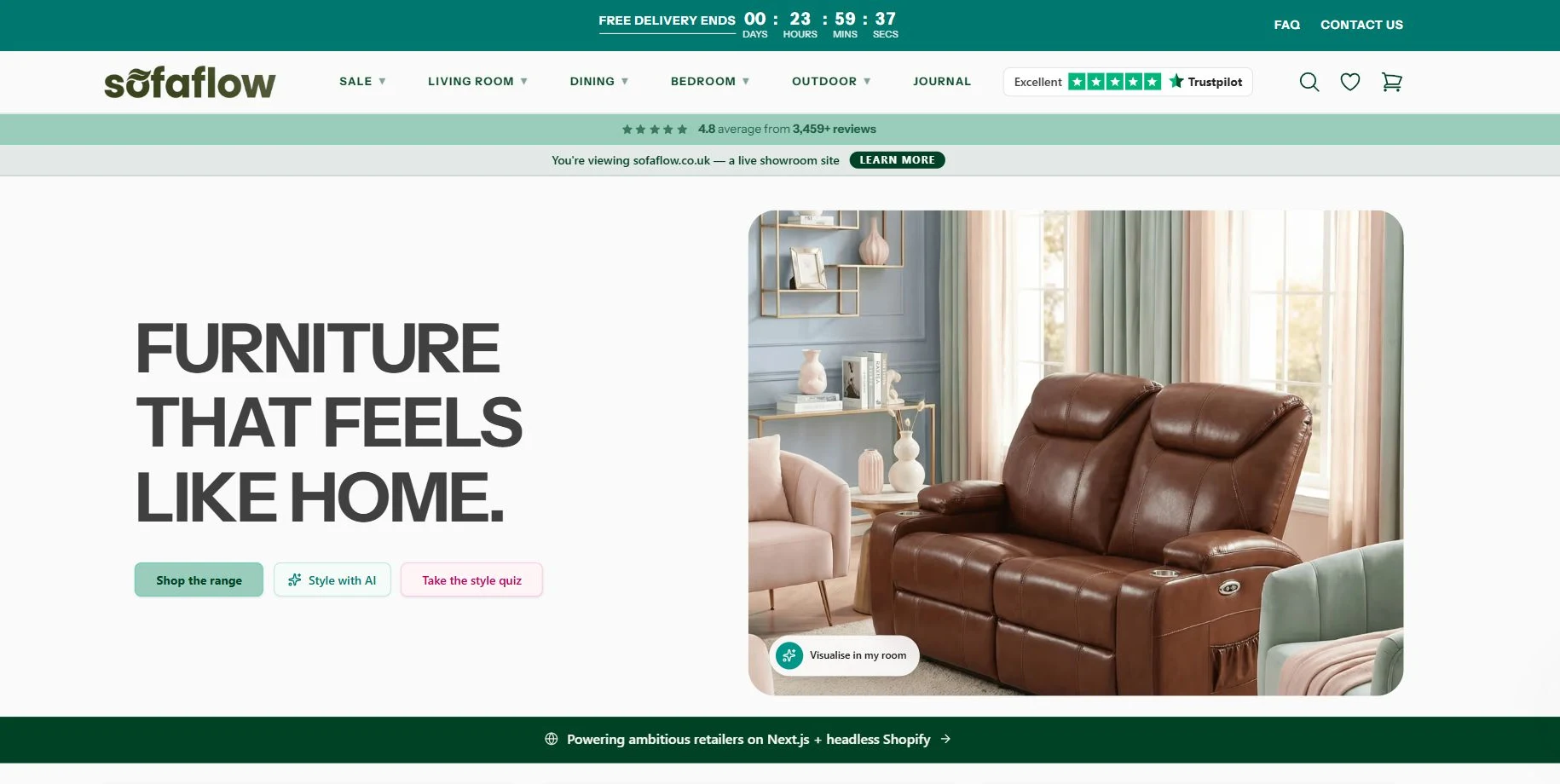
I built SofaFlow as a working concept for furniture retailers, focused on helping customers make better-informed choices before a showroom visit or order.
Visit sofaflow.co.uk- Year
- 2026
- Role
- Product design · Full-stack development
- Built with
- Next.js · React · Convex
The problem
What needed to work better.
Buying a sofa online involves practical questions about size, fit, comfort and how it will look in a room. Standard product pages often leave customers to work those things out alone.
What I built
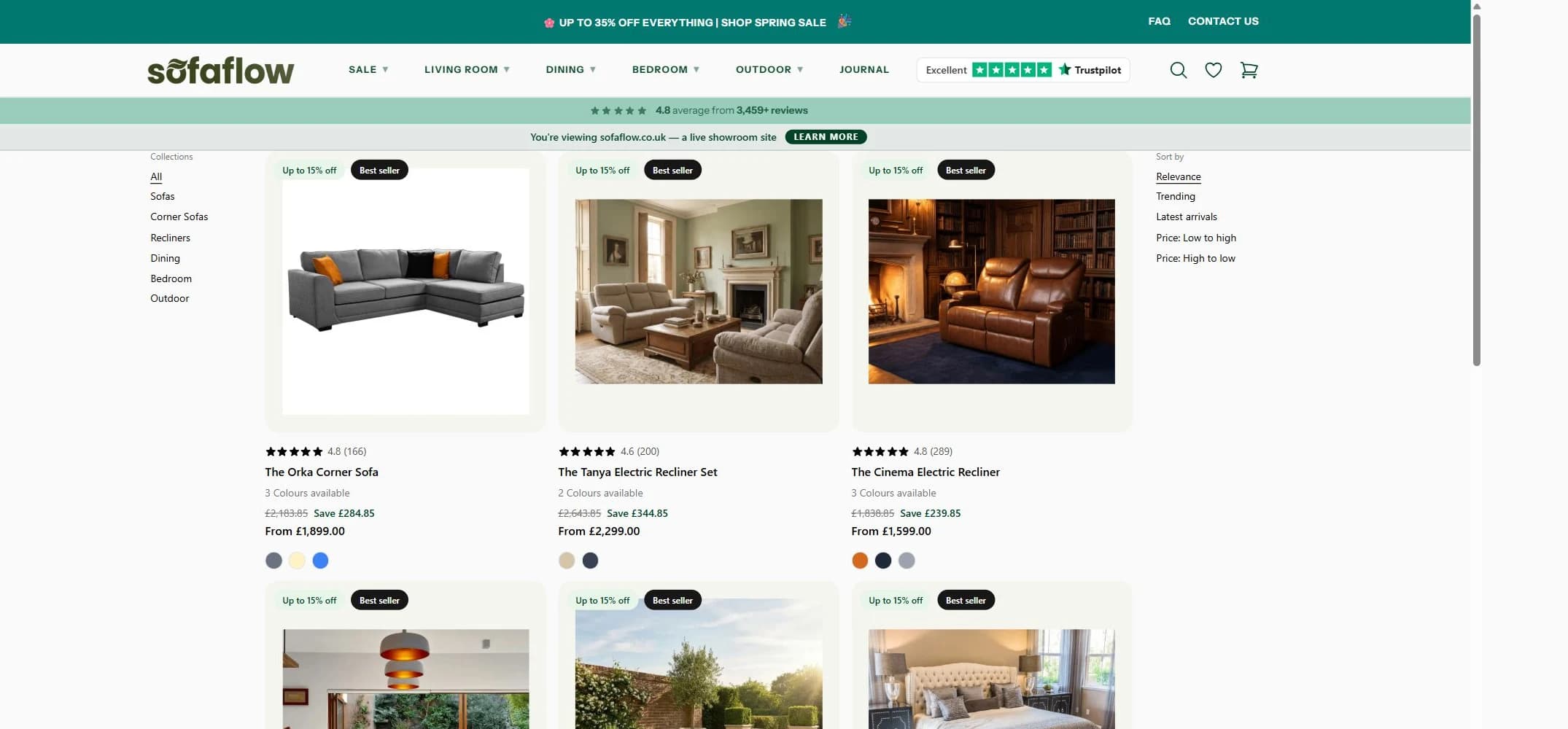
The storefront combines product browsing with guided recommendations, conversational help, size checks and in-room visualisation.
Project evidence
My role, testing and next steps.
- Ownership and collaboration
- Built with my dad’s commercial input; I am responsible for the product design, storefront and full-stack implementation.
- Testing evidence
- Repeatable checks cover product accuracy, lead capture, retries, voice sessions and saved conversation history.
- What I would improve next
- Test the concept with furniture retailers using real catalogue and journey data, then prioritise the features that improve customer confidence.
Main areas
What I worked on.
- 01Text and live-voice shopping assistance
- 02360° viewer and in-room WebAR
- 03VR-ready product scene direction
- 04Fit guidance and product comparison
- 05Responsive product and checkout journeys
- 06Search and practical buying guides
- 07Retailer enquiry and lead-capture flow
My role
Designing the journey beyond the home page.
I worked across the storefront, catalogue, product pages, search, content and retailer-facing pages. I connected the experience to Shopify product data and built the supporting Convex flows for conversations and enquiries.
The aim was to make each step useful on its own while keeping a clear route from browsing to asking a question, booking a showroom visit or starting an order.
Key decisions
Helping customers answer practical questions.
Product pages bring dimensions, fabric choices, finance information and visual tools into one place. A 360-degree viewer and in-room AR help customers understand the product beyond a flat image.
The AR flow is aimed at the question a shopper actually has: will this sofa fit and feel right in my room? I treated the 3D product as part of the buying journey, not as decoration. The same thinking creates a clear route toward VR-ready room scenes where customers could compare materials, proportions and layouts in more depth.
Sofie, the shopping assistant, can search real products, explain details, suggest relevant options and capture an enquiry. Its product cards use catalogue data so it does not make up products or prices.
I kept a clear distinction between features already working and ideas that still need retailer data or integrations. That makes the concept easier to trust and more useful in retailer conversations.
Working together
Building and reviewing the idea with my dad.
I have worked on SofaFlow with my dad as part of the same 18-month period. We used his commercial perspective and my product and development work to test how a more helpful furniture website could feel.
We reviewed the wording, product flow and retailer pitch together. That helped me learn when a technically interesting feature supports the customer and when it only adds noise.
What I learned
Testing what helps customers buy with confidence.
Furniture has a longer and more considered buying journey than many online products. Clear measurements, honest availability, useful guidance and an easy way to reach a person matter as much as visual polish.
I also built repeatable checks for the assistant, including product accuracy, lead capture, retry behaviour, voice sessions and saved conversation history.
Tools used